
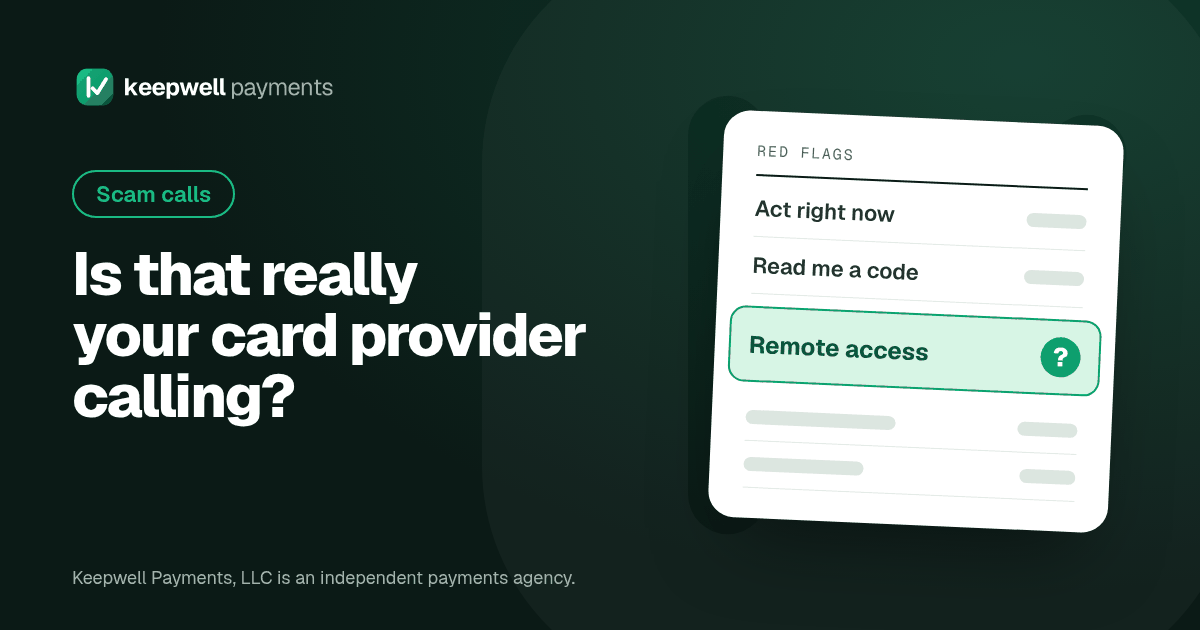
Some scammers pretend to be a business's card provider. They call, text or email with an urgent message: your terminal needs an update, your account is about to be shut off, or there's a problem with your deposits. The goal is to get a password, a code, card numbers or money.
What does a scam call from a fake card provider sound like?
It can sound official. The caller may know your business name and use the name of a real company. Watch for these red flags:
- Pressure to act right now, or else your account will be closed.
- A request for your password, a login code sent to your phone, or your account details.
- A request for card numbers from receipts, paper or your terminal.
- A request to install an app, or to let someone connect to your computer or terminal from far away.
- A request to pay a fee by gift card, wire transfer or cryptocurrency.
- A link in a text or email that asks you to sign in.
What should you do if you get one?
- Don't give out any passwords, codes or card numbers.
- Hang up, or don't reply. Then contact your provider yourself, using the phone number on your statement or your agreement, not a number the caller gives you.
- If you already shared something, call your provider right away and change any passwords you gave out.
- Report it to the Federal Trade Commission at ReportFraud.ftc.gov.
Not sure who your provider is, or who services your terminal? Our guide to owned, rented or leased card terminals covers where to find out. Knowing that ahead of time makes a fake call easier to spot.
What should you tell your staff?
A scam call may come when the owner isn't there. Tell your team:
- Nobody gives out passwords, codes or card numbers by phone, text or email.
- Any call about the terminal or the account gets a callback number and goes to the owner or manager.
- Nobody installs an app or lets a caller connect to a device.
- Card numbers stay off paper, email and text.
Those habits also help protect your customers' card data. Our guide to which PCI questionnaire fits how you take cards walks through how card data moves through your business.
What's in the news about impersonation scams?
On Oct. 1, 2026, the Federal Trade Commission published a notice in the Federal Register asking for public comment on a possible new rule. It would look at search engines, social media and other online platforms whose ads may help scammers pretend to be government agencies or real businesses. The FTC says impersonation is the top type of fraud consumers report to it. Comments are due Nov. 30, 2026.
This is an early step, not a final rule, and it doesn't change what you need to do today. One practical point: a phone number or link in an online ad or search result may not belong to your real provider. Use the number on your statement or agreement instead.
Frequently asked questions
How can I tell if a call from my card provider is real?
Hang up and call the number on your statement or agreement, not a number the caller gives you or one from an online ad. Be wary of pressure to act right now, or requests for passwords, codes or card numbers.
What should I do if I already gave a scammer information?
Call your provider right away using the number on your statement, change any passwords you shared, and report it to the Federal Trade Commission at ReportFraud.ftc.gov.
What should I tell my staff about scam calls?
Nobody gives out passwords, codes or card numbers by phone, text or email, and nobody lets a caller connect to a device. Calls about the terminal or the account get a callback number and go to the owner or manager.
What is the FTC asking about impersonation scams?
On Oct. 1, 2026, the FTC asked for public comment on a possible rule about online platforms whose ads may help impersonation scams. It's an early step, not a final rule, and comments are due Nov. 30, 2026.
How we approach it at Keepwell
Not sure what's on your statement, or who to call about your account? Send us one month's statement for a free review. We'll walk you through your fees in plain English.
Want us to look at your statement? Upload it at keepwellpayments.com/upload for a free, no-obligation review.
Sources
- Federal Trade Commission, "Rule on Impersonation of Government and Businesses," advance notice of proposed rulemaking, Federal Register (Oct. 1, 2026): federalregister.gov (opens in a new tab)
- Federal Trade Commission, ReportFraud.ftc.gov (where to report a scam): reportfraud.ftc.gov (opens in a new tab)
Keepwell Payments, LLC is an independent payments agency. Accounts are set up with a payment processor we partner with, named before you sign. Merchant accounts are subject to approval. Results vary by business. This article is general information, not financial, legal or security advice.